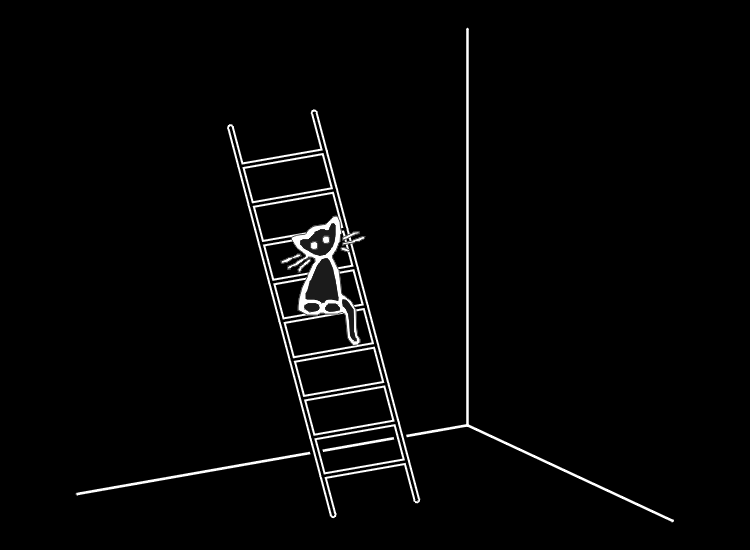
Kitten on a Ladder
Based on the book “Lines and Curves”.
Use the arrow keys to move between slides.
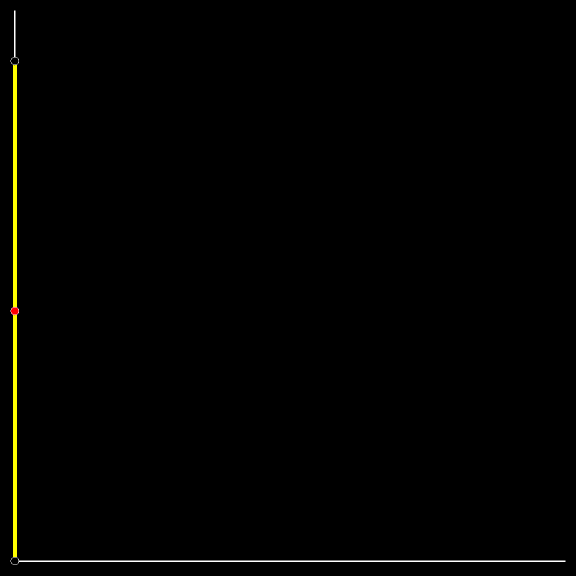
A ladder leaning against a wall slides down onto the floor
(remaining in contact with the wall throughout).
What path does a kitten sitting at the midpoint of the ladder follow?
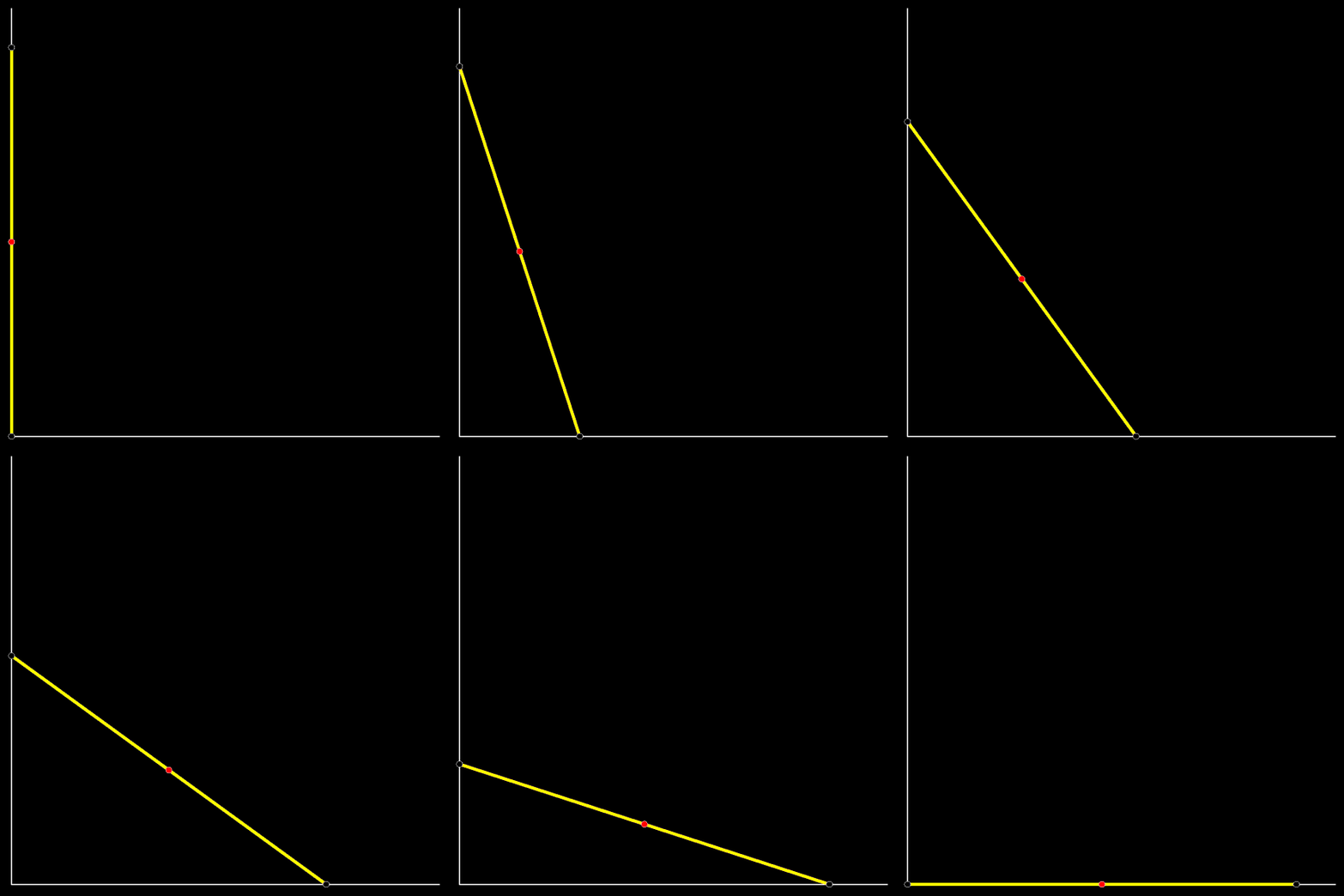
A ladder leaning against a wall slides down onto the floor
(remaining in contact with the wall throughout).
What path does a kitten sitting at the midpoint of the ladder follow?
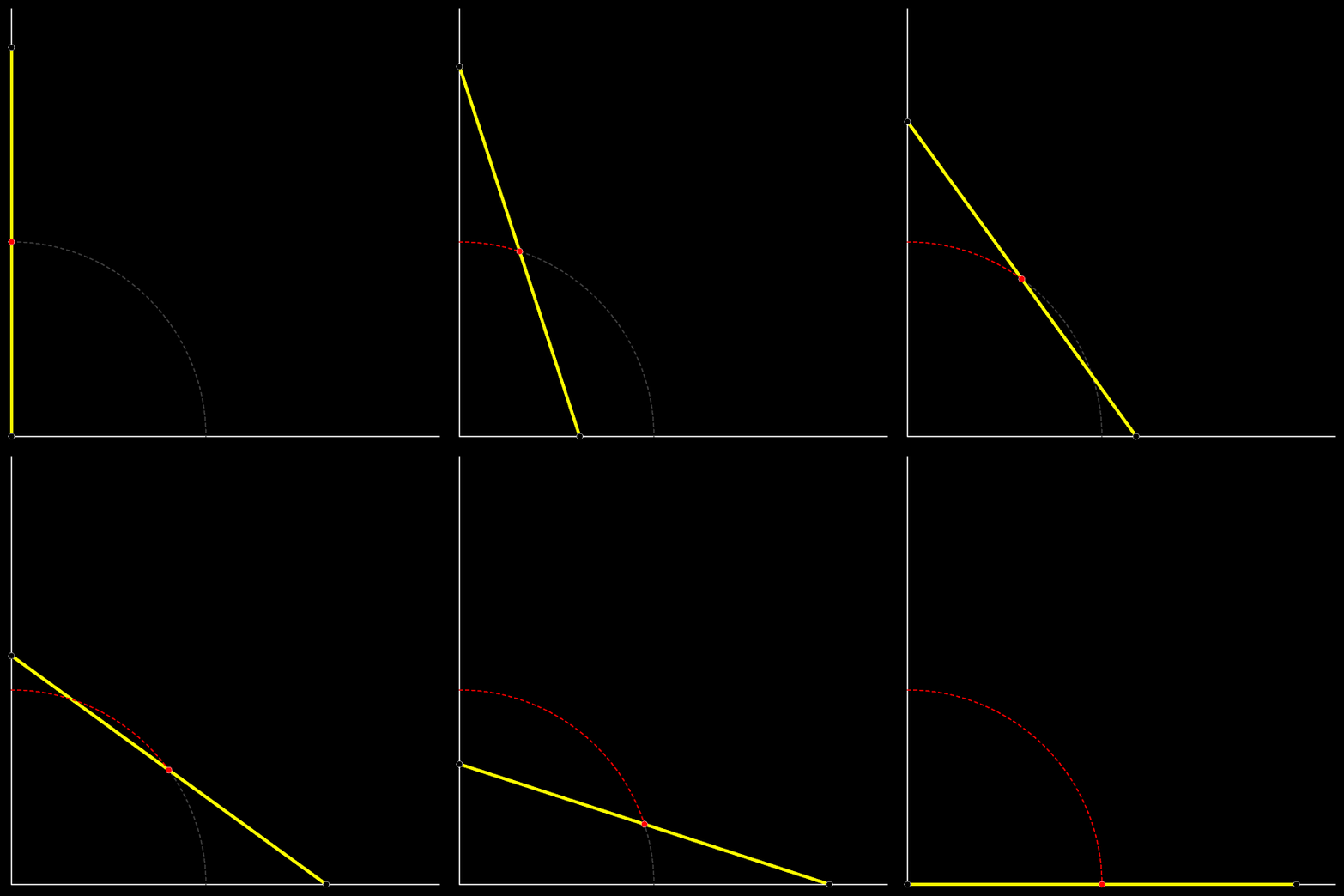
It seems that the path is an arc of a circle. But how can we prove it?
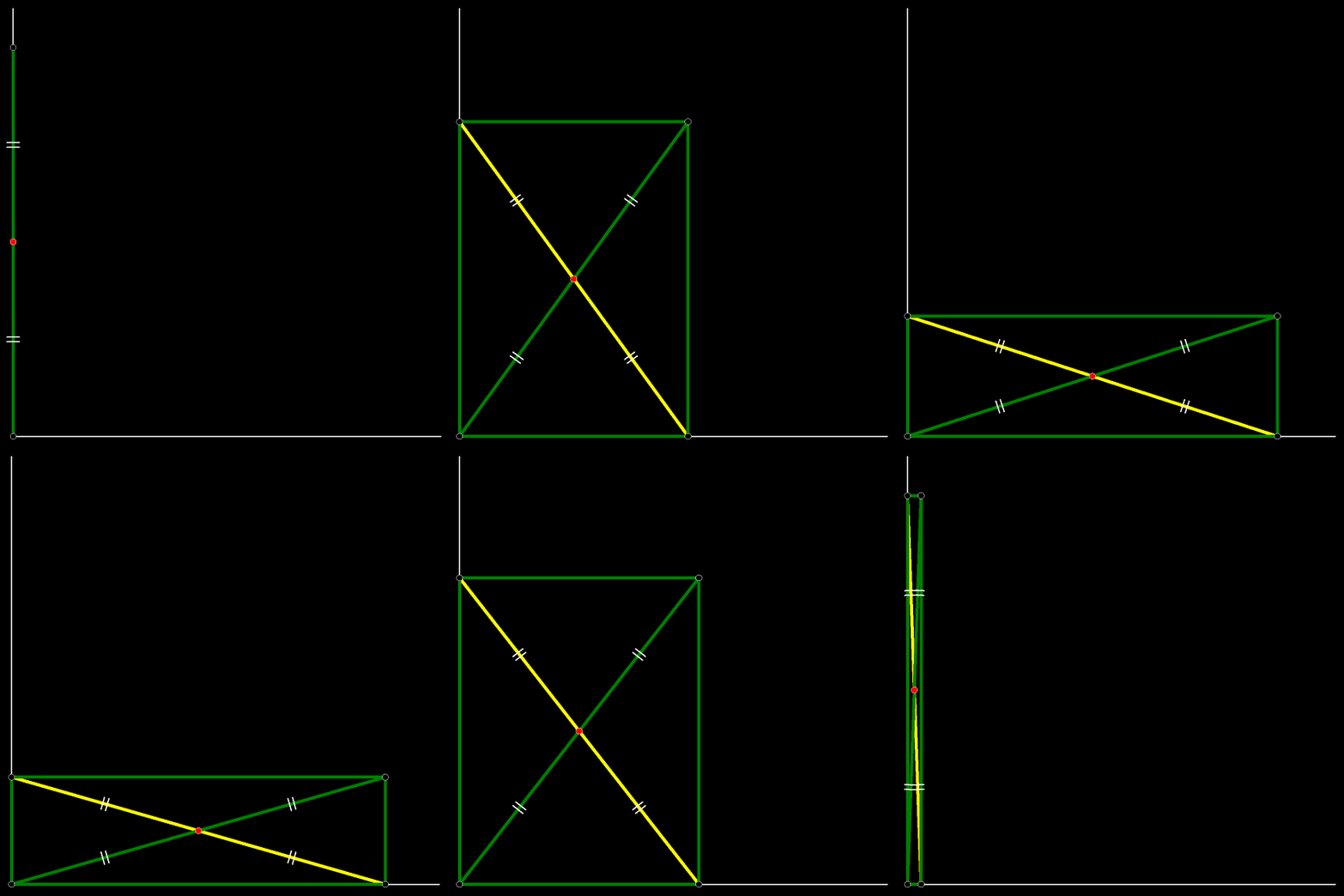
Complete the rectangle.
Its diagonals are equal and bisect each other.
So the kitten is also at the midpoint of the green ladder,
pivoted at the corner.
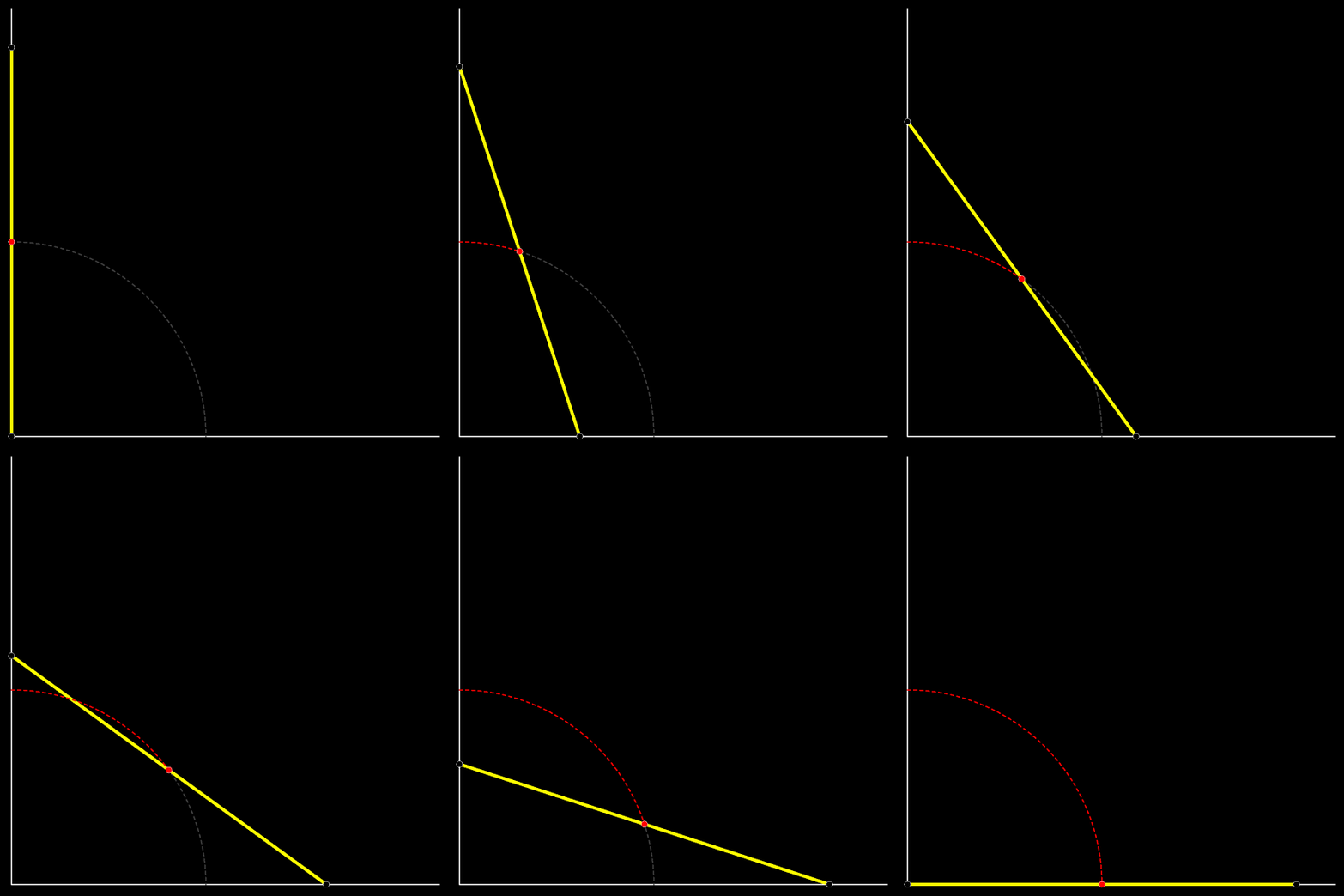
We have proved that the kitten moves along a circle.
Let us turn to a seemingly unrelated problem.
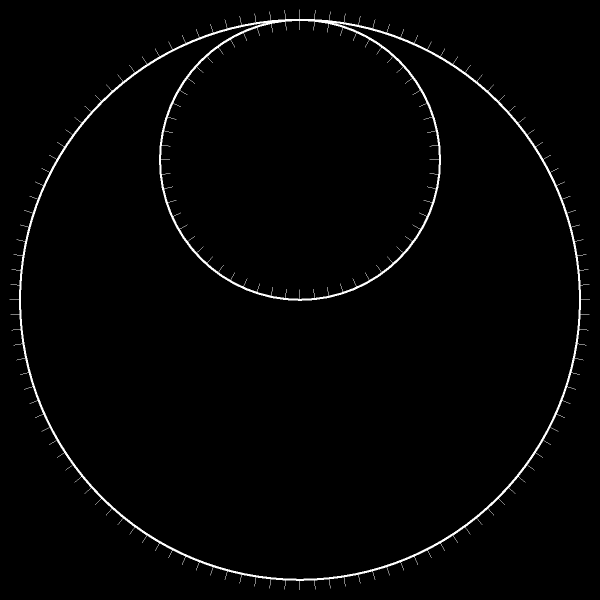
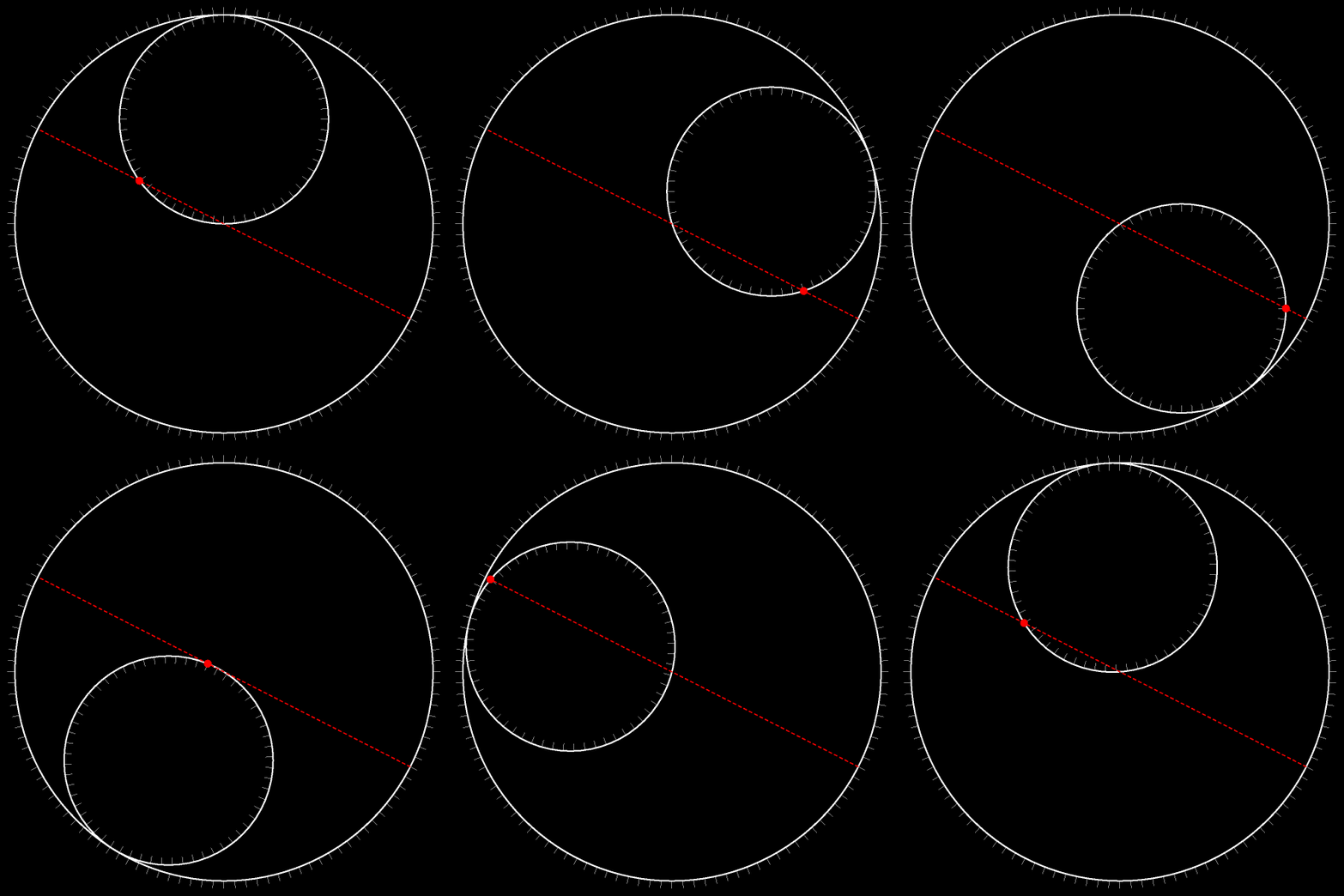
Consider a fixed circle. Inside it, a circle of half that radius rolls without slipping.
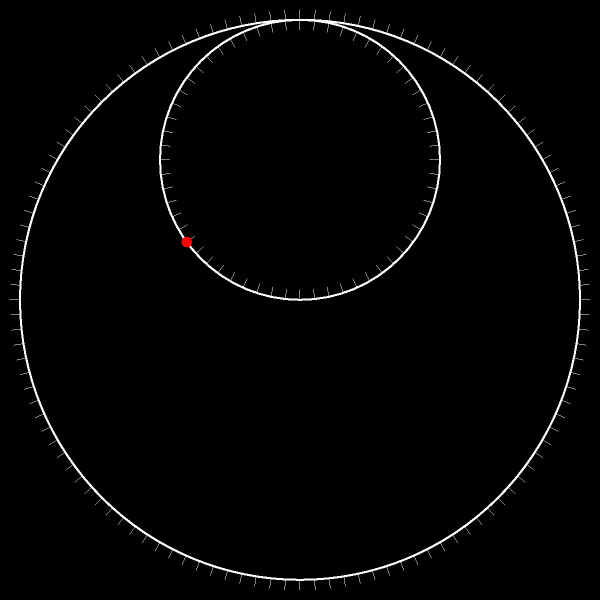
Consider a fixed circle. Inside it, a circle of half that radius rolls without slipping.
What path does a marked point on the smaller circle trace?
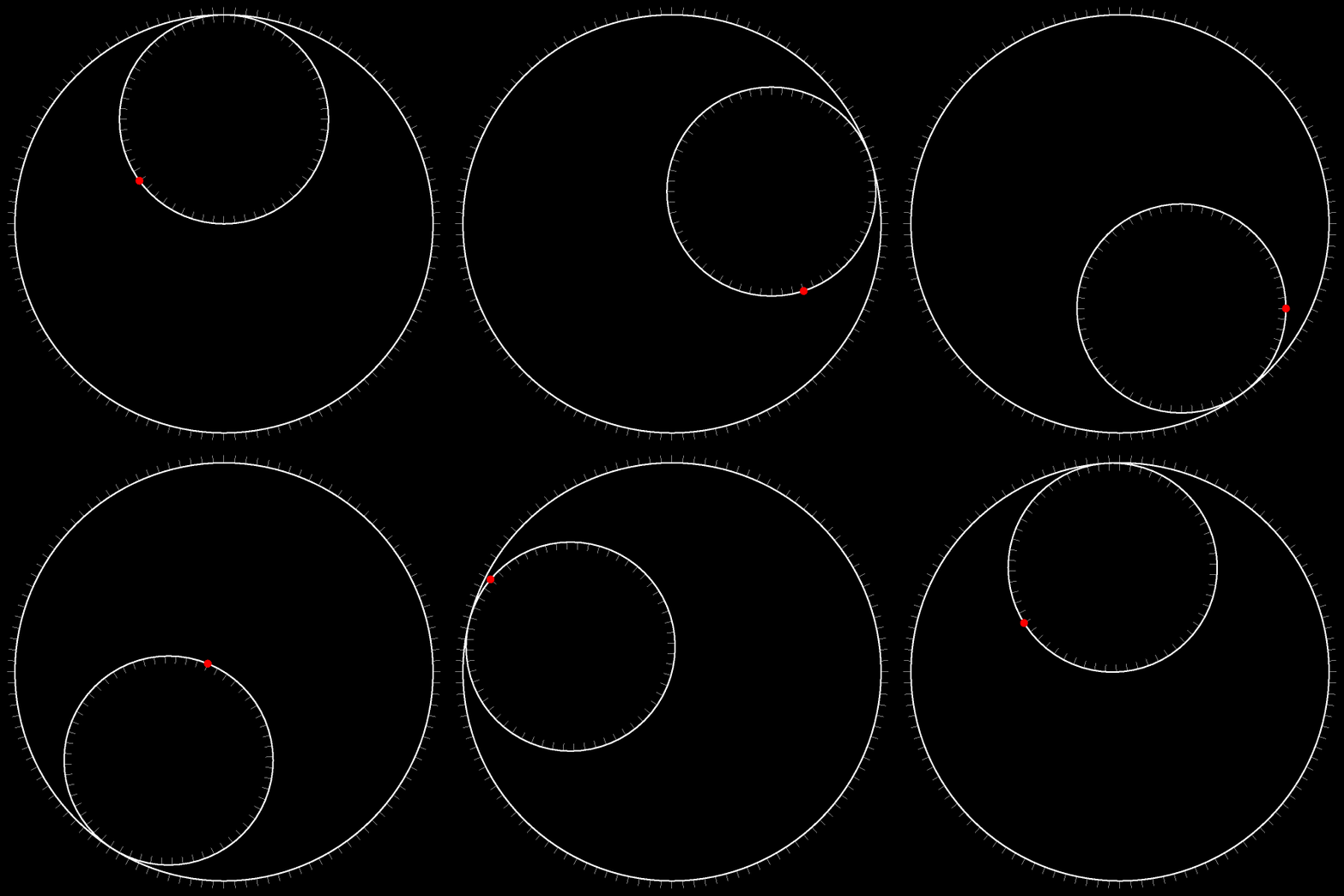
Consider a fixed circle. Inside it, a circle of half that radius rolls without slipping.
What path does a marked point on the smaller circle trace?
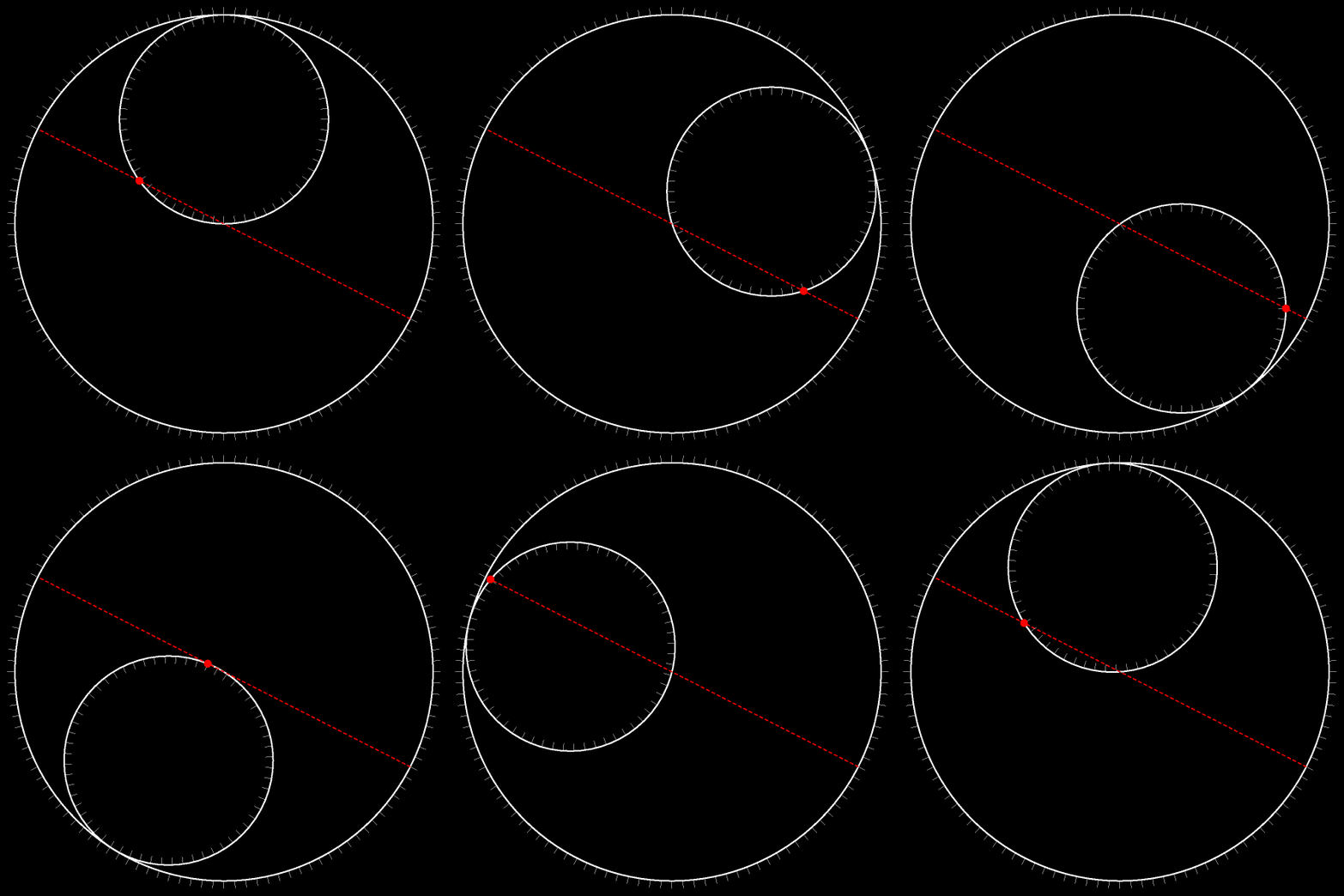
The answer is surprisingly simple: a straight line!
More precisely, a diameter of the fixed circle.
(This result is known as Copernicus' theorem.)
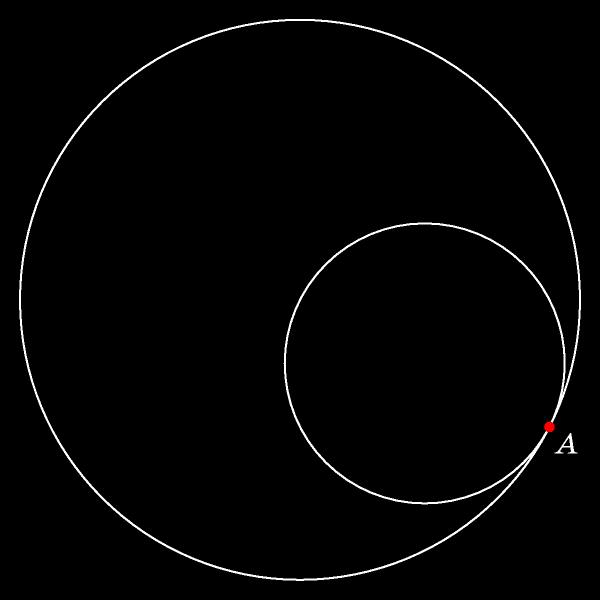
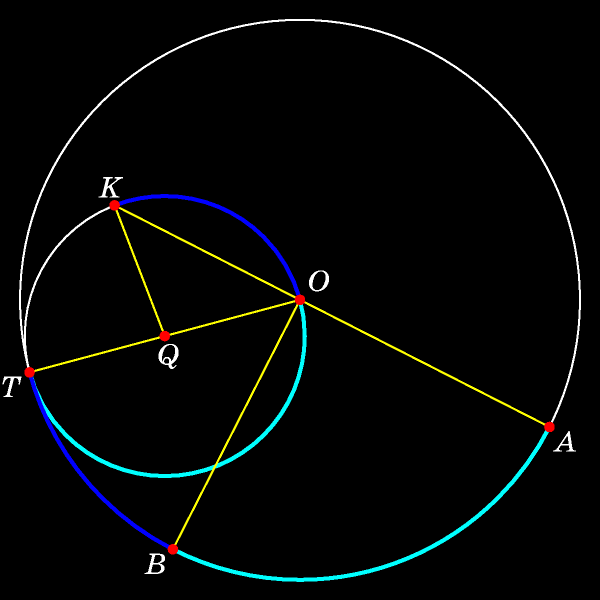
At a certain moment the circles touch at the marked point.
Label this point on the large circle $A$.
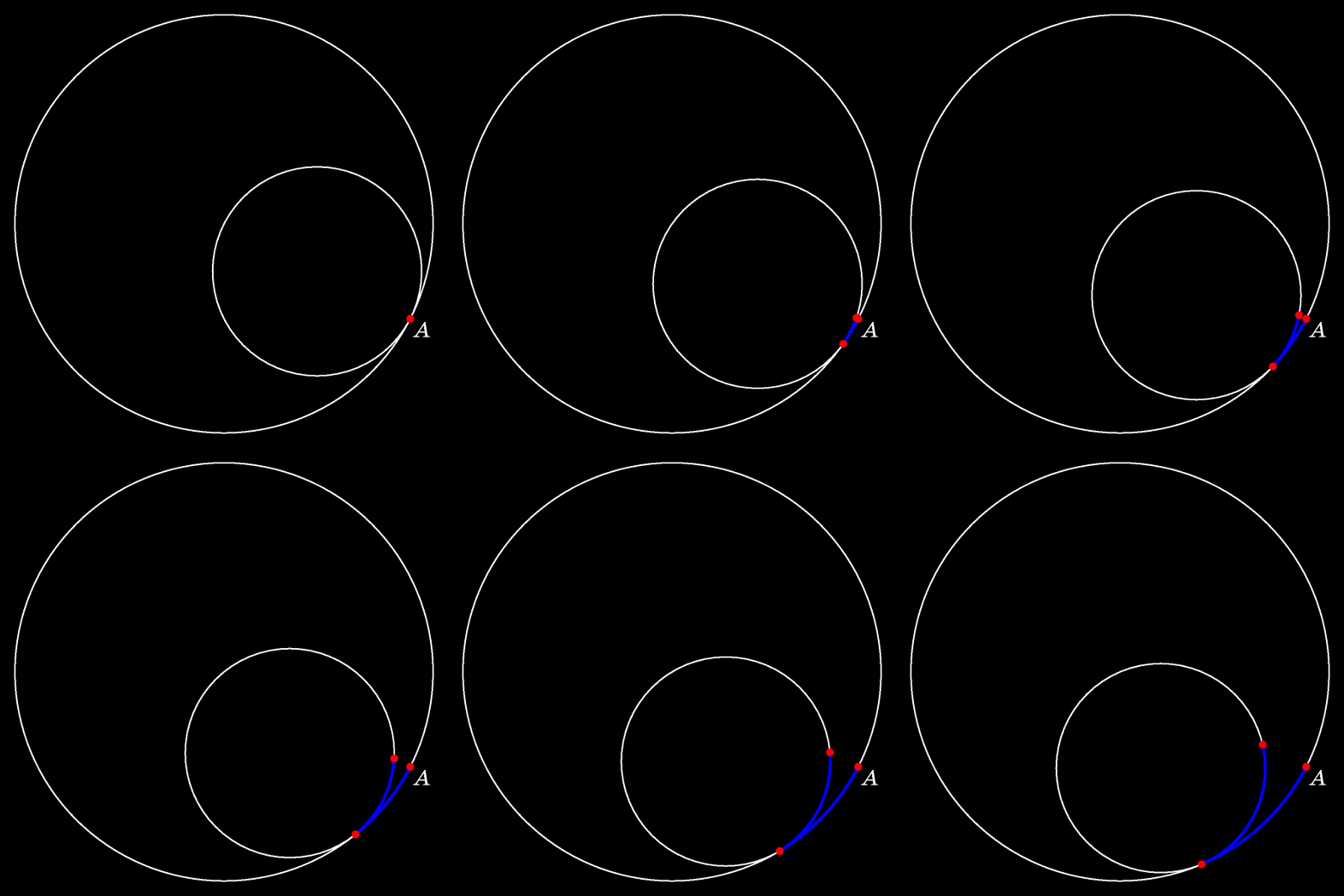
Let the smaller circle roll a little farther.
Since there is no slipping,
the blue arcs have equal lengths.
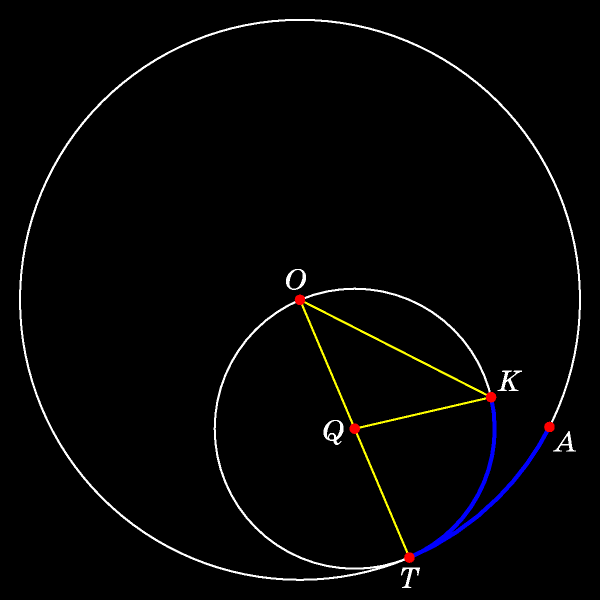
Since the arcs $KT$ and $AT$ have equal lengths, and the moving circle has half the radius of the fixed circle, $\angle KQT=2\angle AOT$.
By the inscribed-angle theorem, $\angle KOT=\frac 12\angle KQT=\angle AOT$. Thus the point $K$ lies on the radius $OA$.
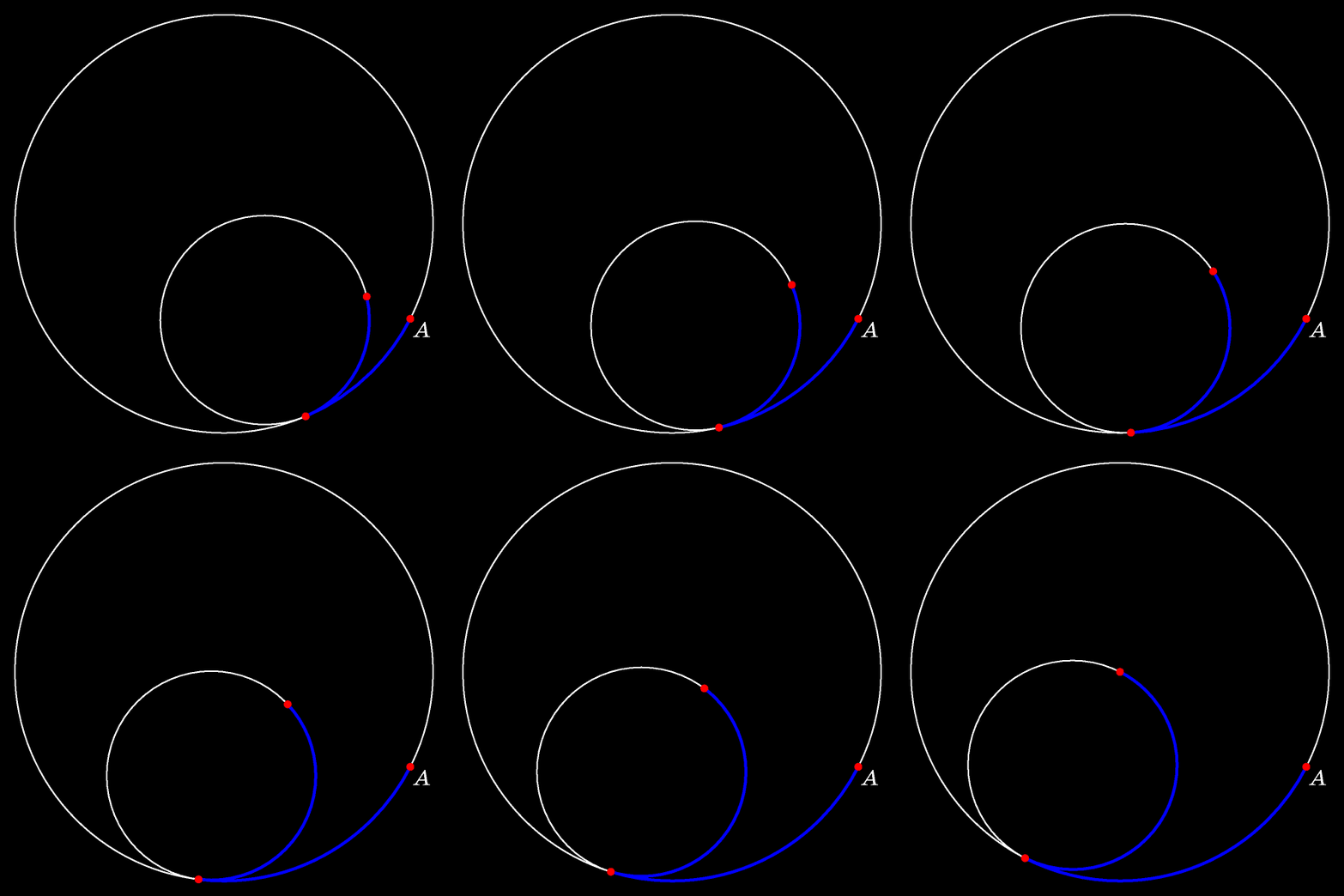
This works until $K$ reaches $O$.
This works until $K$ reaches $O$.
At that moment the angle $AKT$ becomes a right angle.
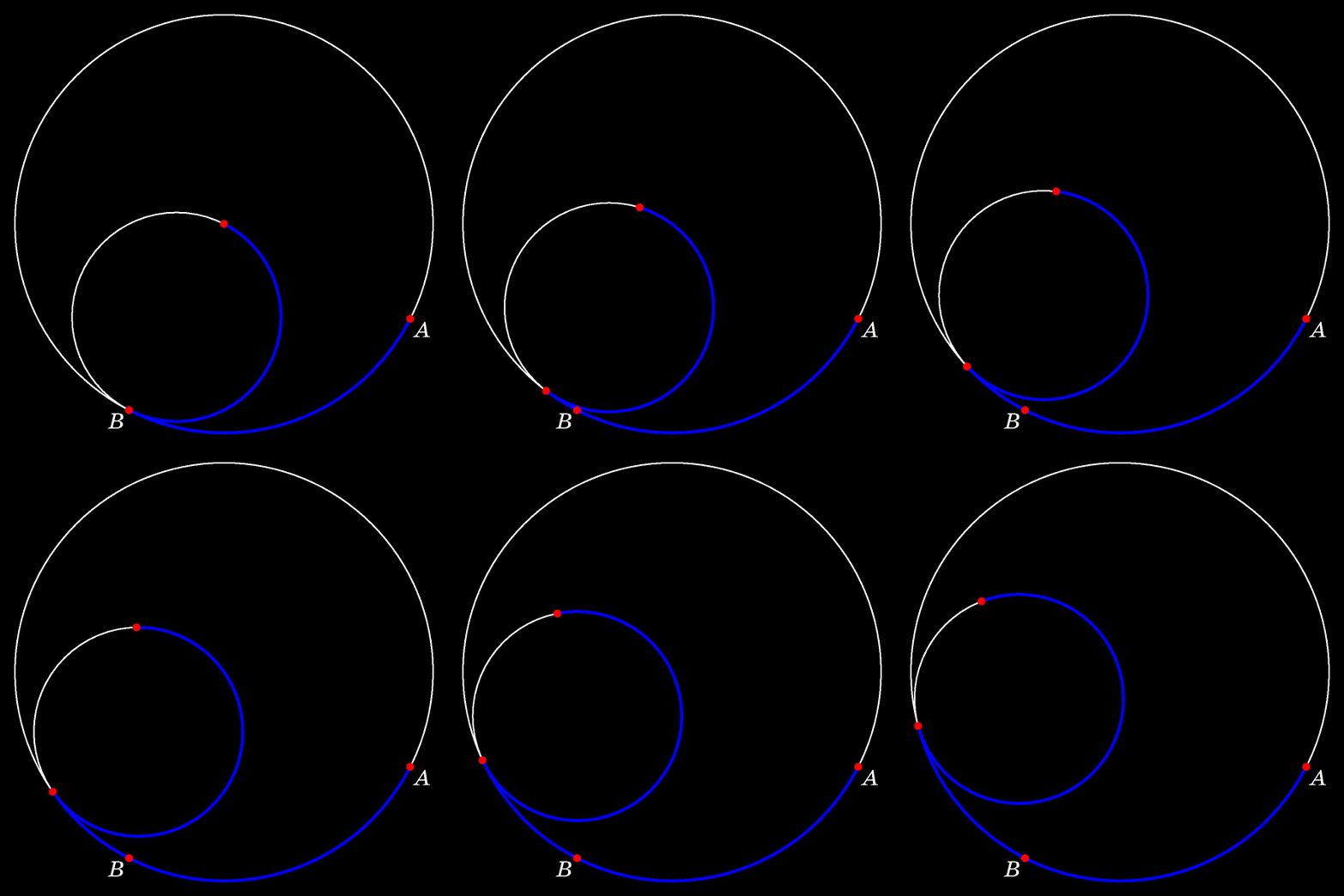
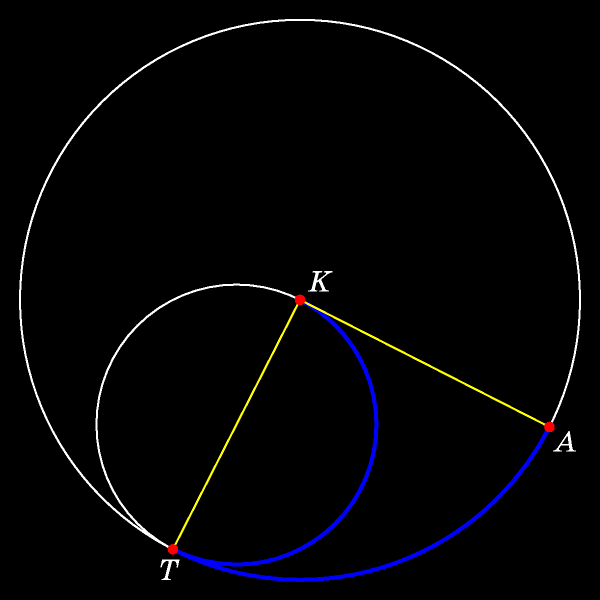
After that, the blue arc on the smaller circle passes through $O$. Thus the angle $KOT$ intercepts the complementary arc, and the argument must be modified slightly.
We obtain $\angle KOT=180^\circ-\angle AOT$,
and the point $K$ still lies on the line $AO$.
This proves Copernicus' theorem.
It turns out that Copernicus' theorem is directly related to the kitten-on-a-ladder problem!
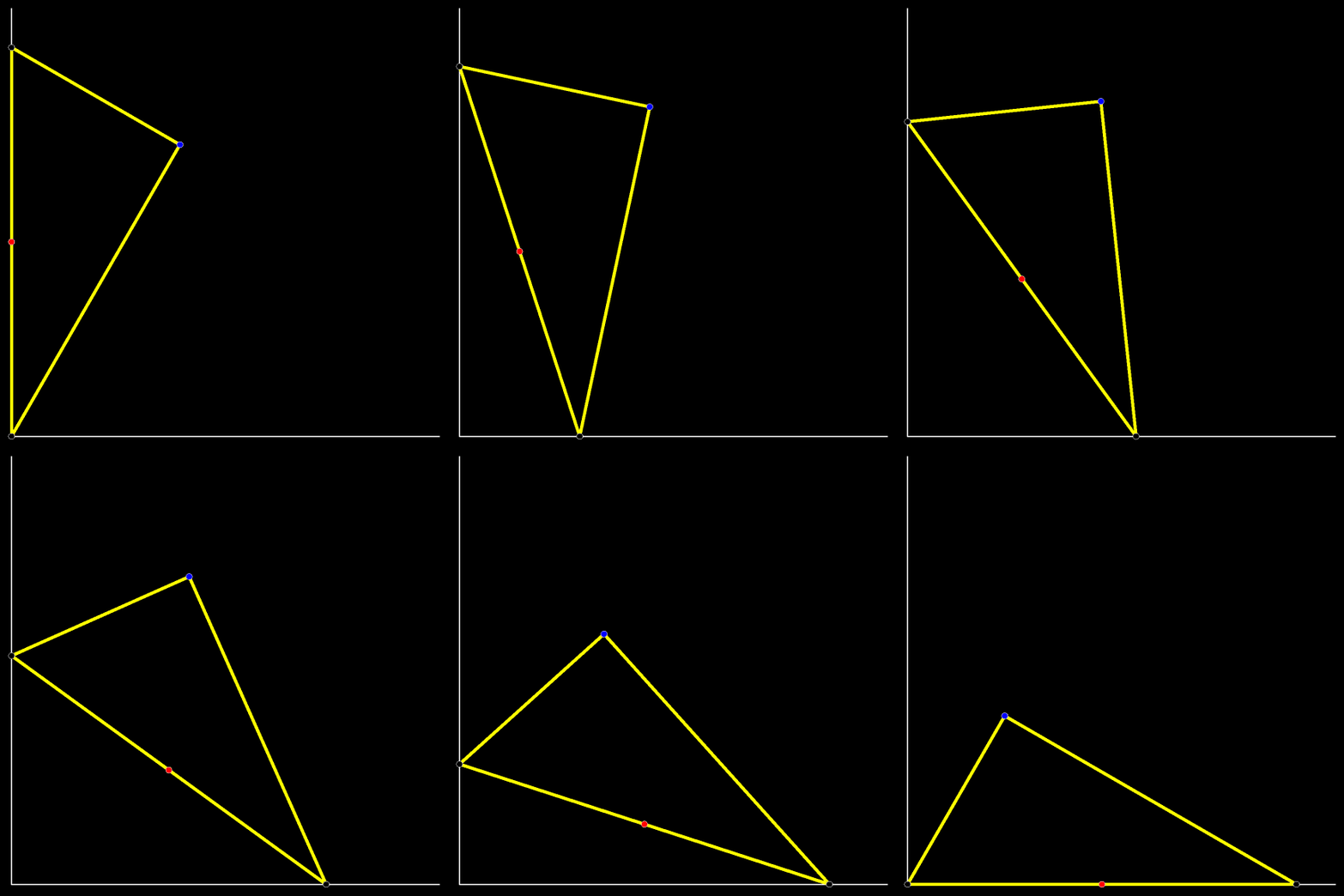
Let us watch a right triangle slide down onto the floor.
Let us watch a right triangle slide down onto the floor.
We know its hypotenuse midpoint traces a circle.
What path does its right-angle vertex follow?
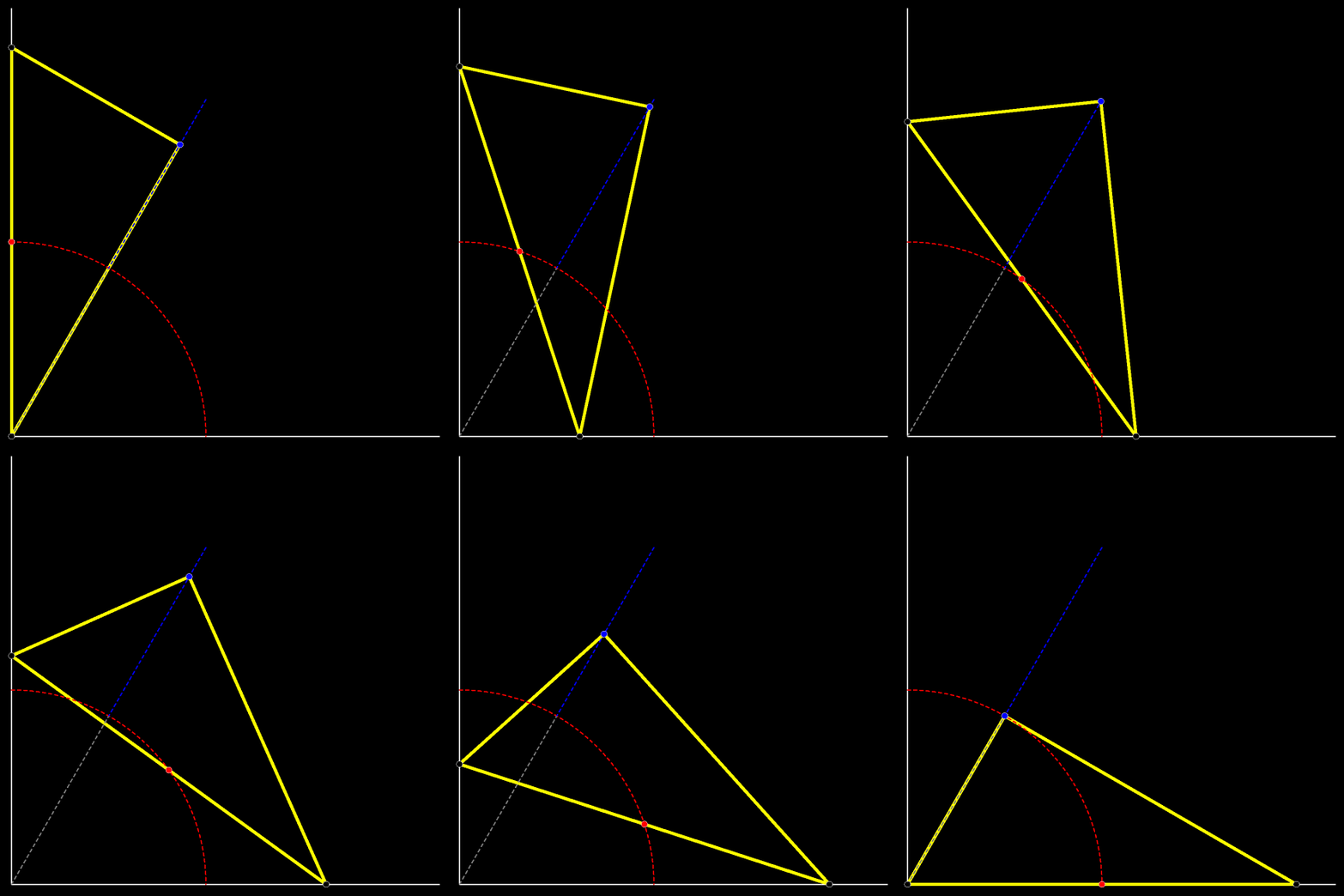
Let us watch a right triangle slide down onto the floor.
We will prove that its right-angle vertex moves along a straight line.
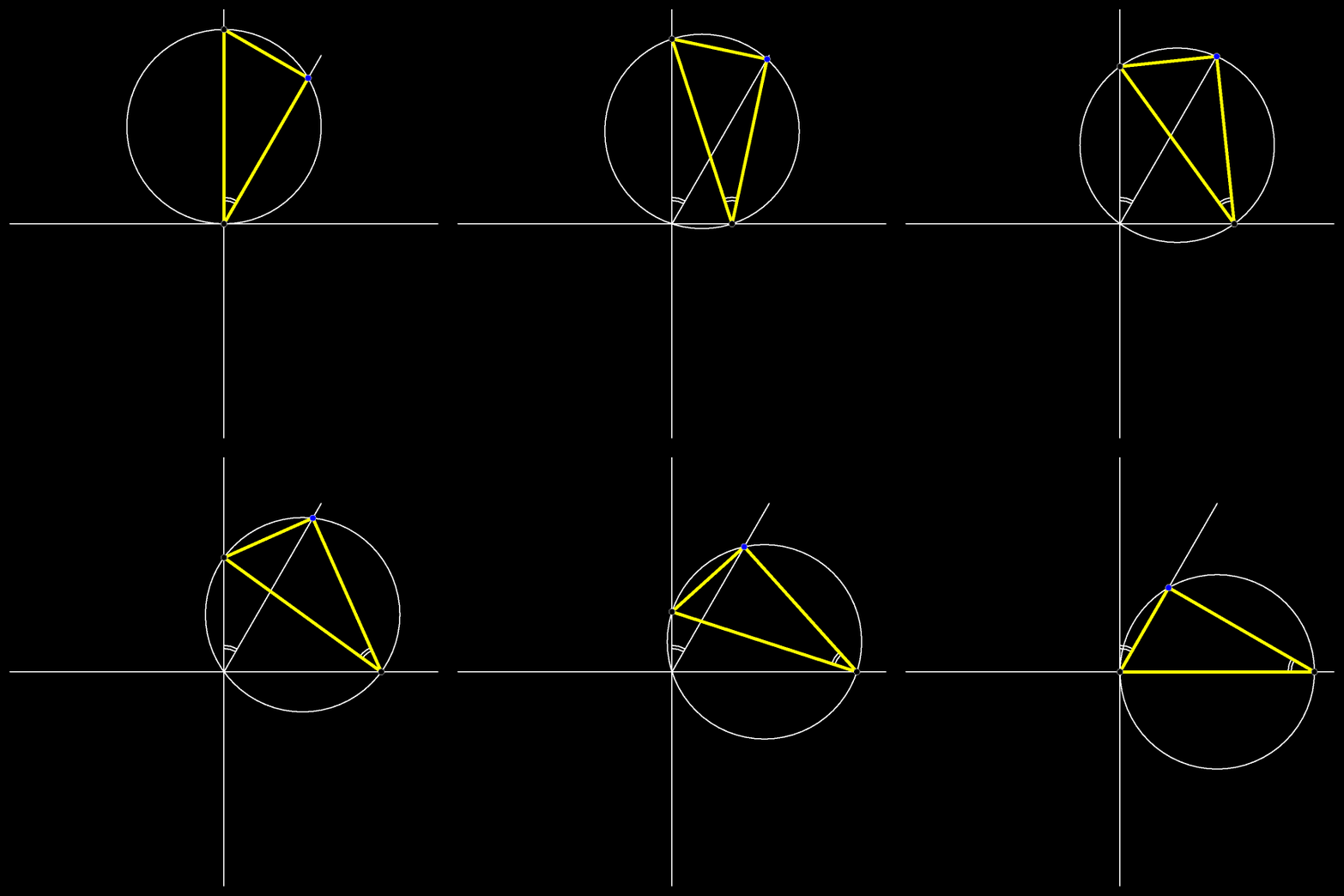
Draw the circumcircle of the triangle. The kitten argument shows that it passes through the corner.
The marked angles subtend the same chord, so they are equal. One of these angles is fixed. Hence the blue vertex moves along a fixed line through the corner.
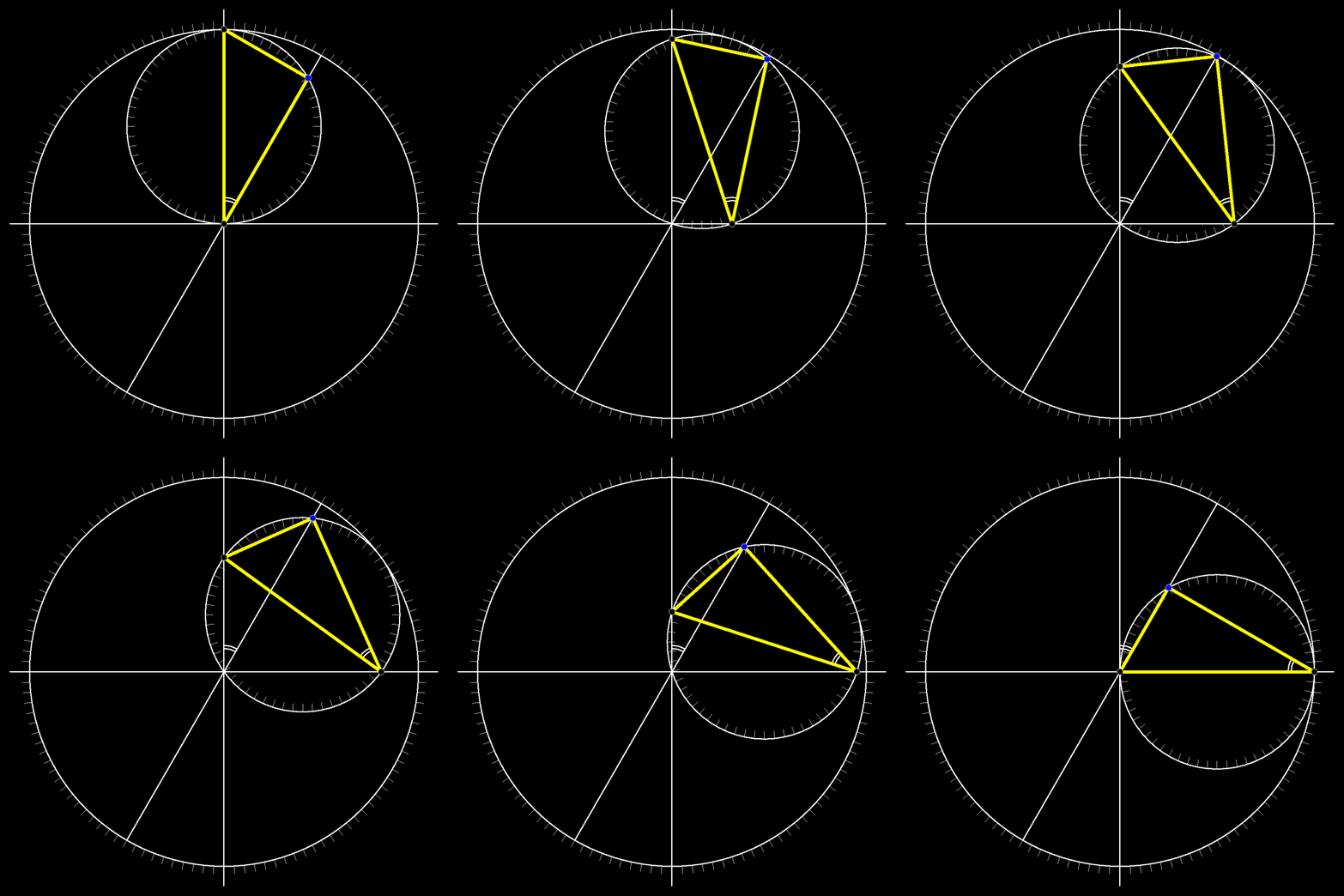
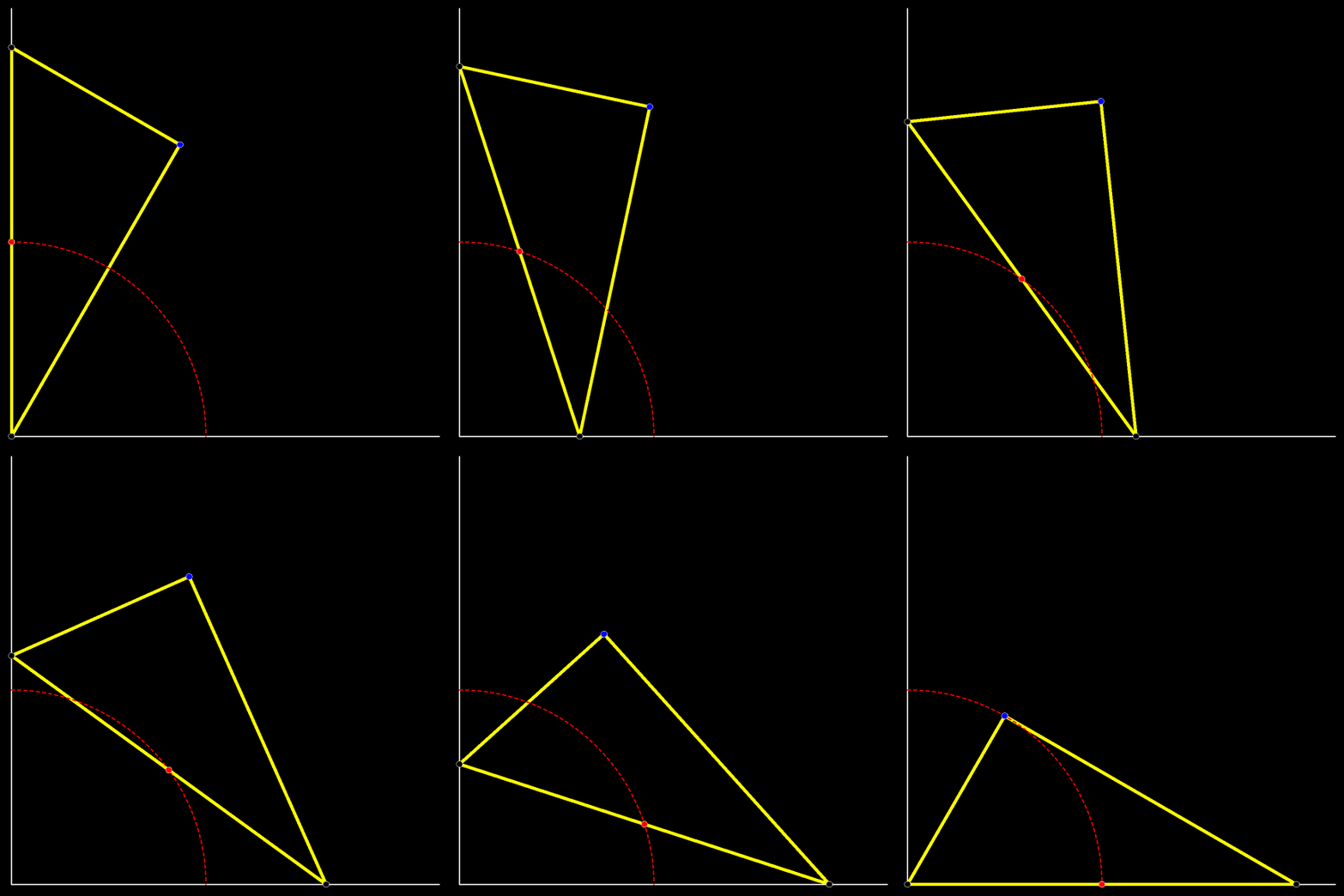
Add a circle with twice that radius.
As the small circle rolls inside the large one, Copernicus' theorem tells us that the black vertices travel along the “wall” and the “floor.”
As the small circle rolls inside the large one, Copernicus' theorem tells us that the black vertices travel along the “wall” and the “floor.”
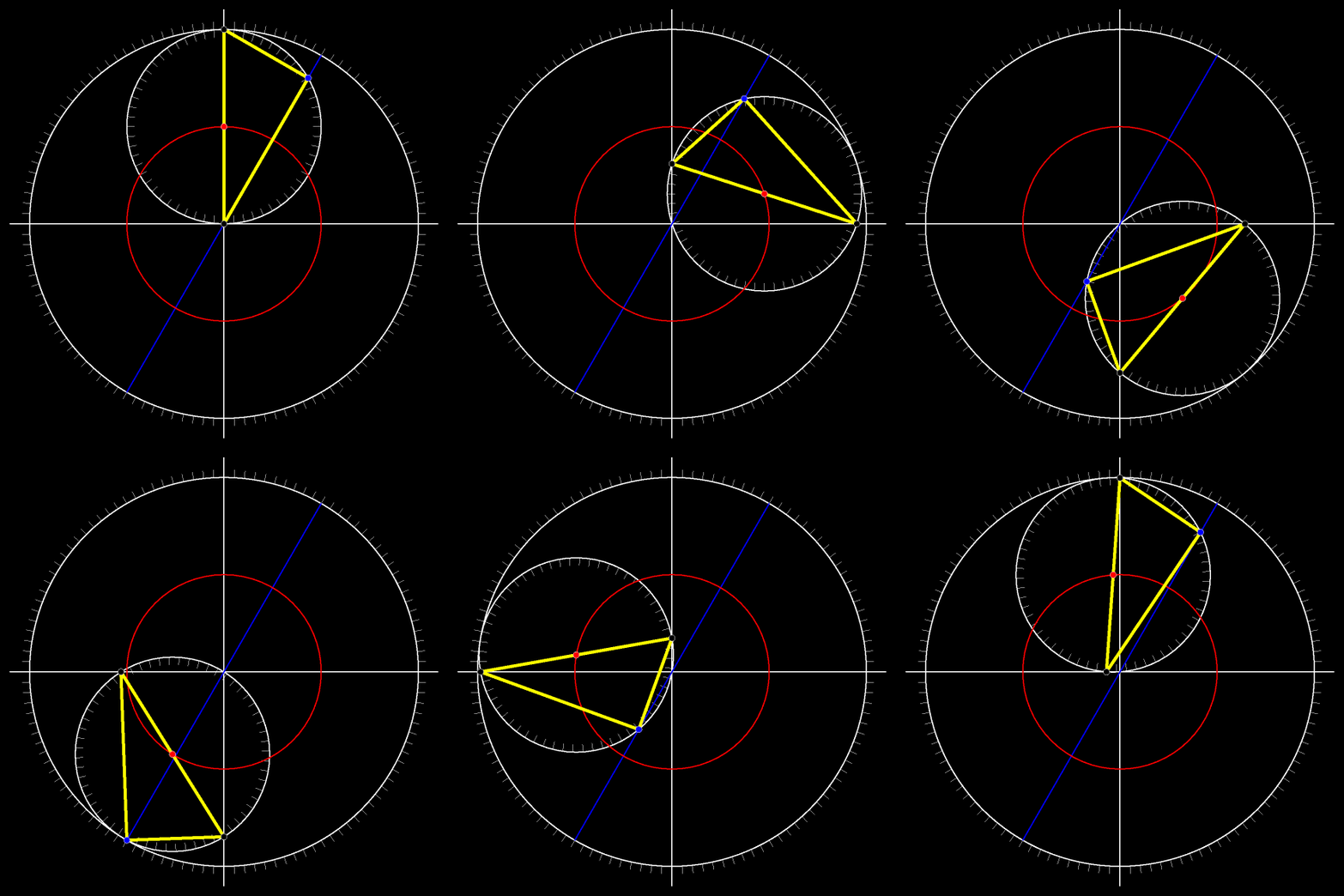
As the small circle rolls inside the large one, Copernicus' theorem tells us that the black vertices travel along the “wall” and the “floor.”
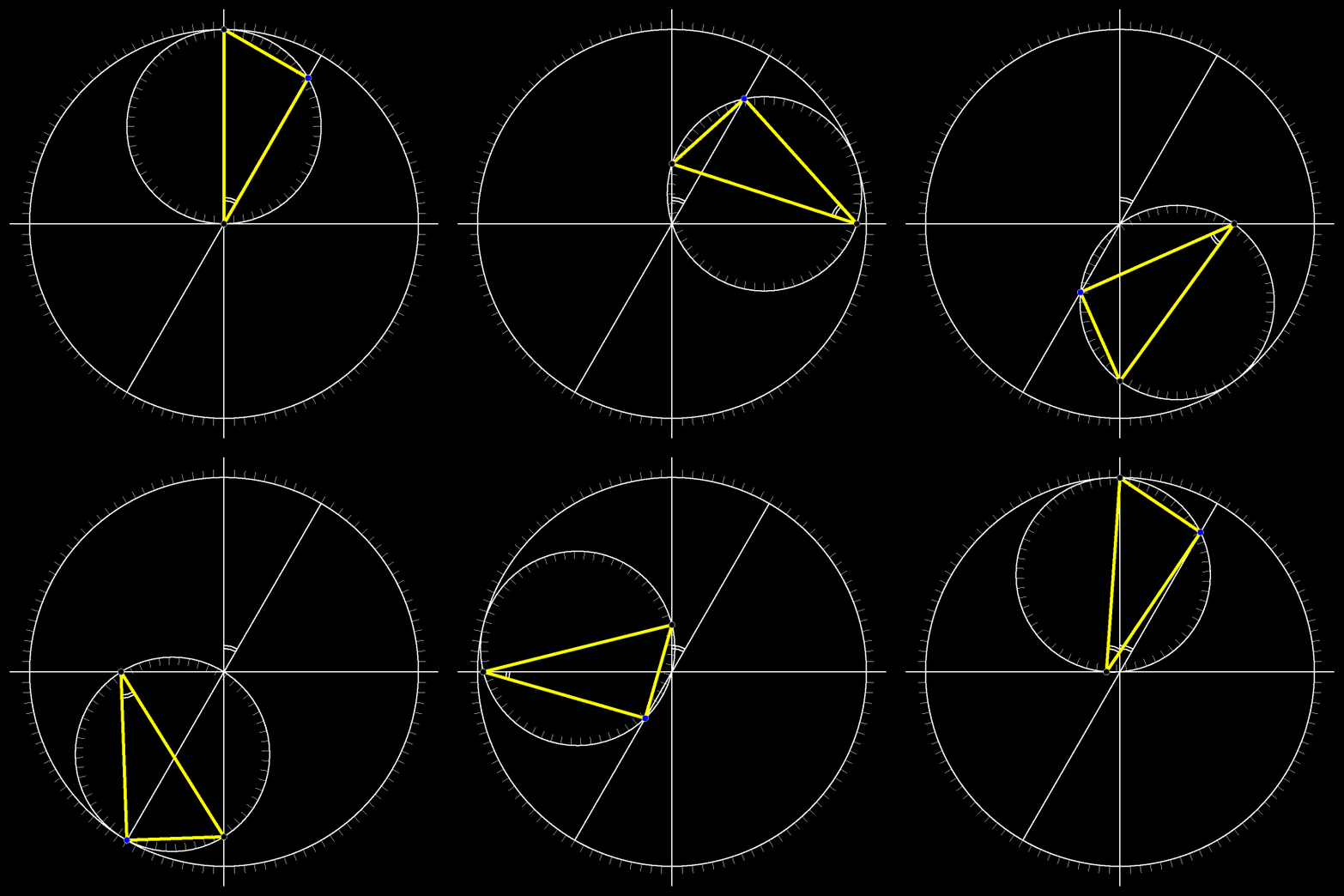
For the same reason, the blue vertex also moves along a straight line.
The kitten, now at the center of the smaller circle, clearly traces a circle.
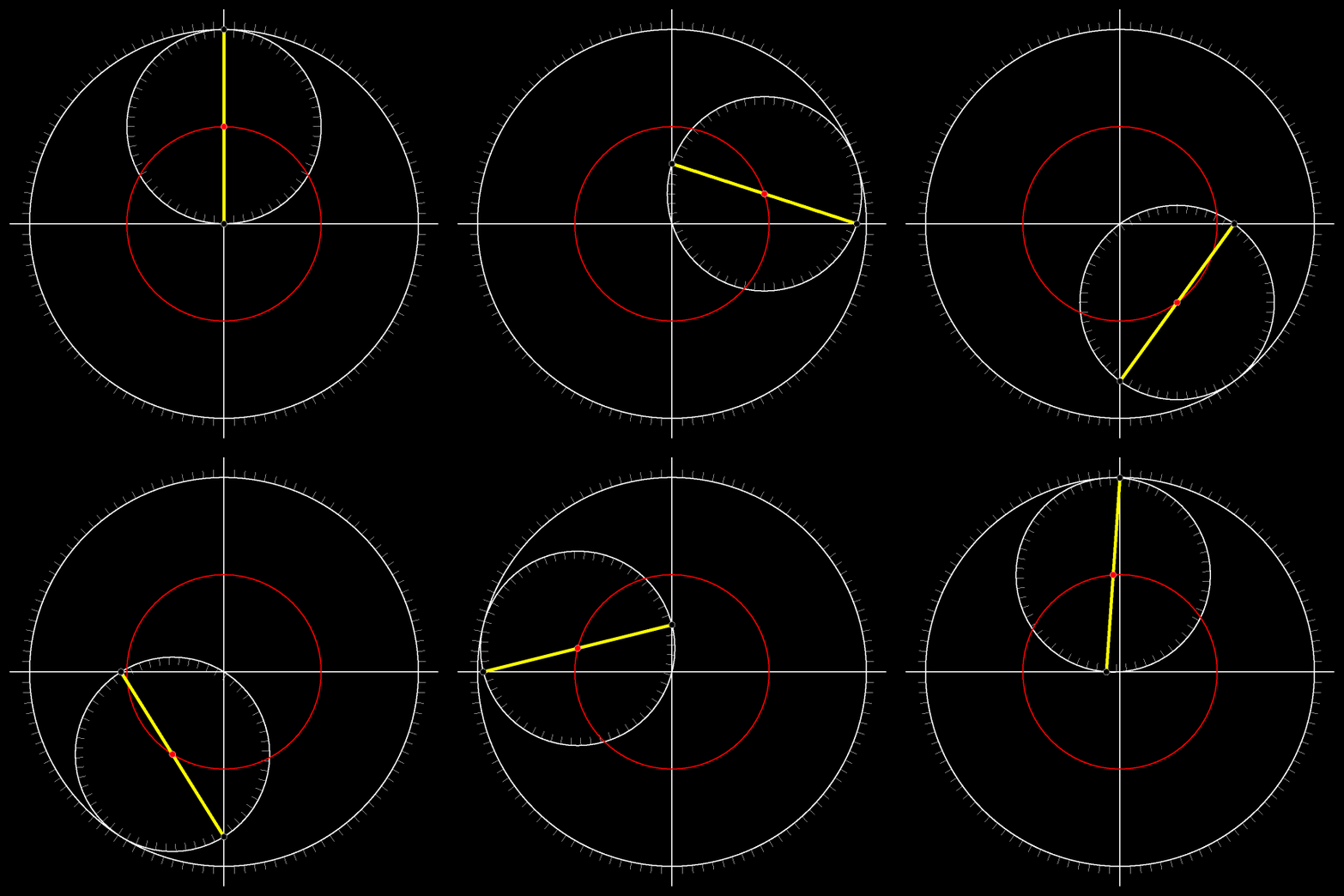
The kitten, now at the center of the smaller circle, clearly traces a circle.
What region does the entire ladder sweep out during this motion?
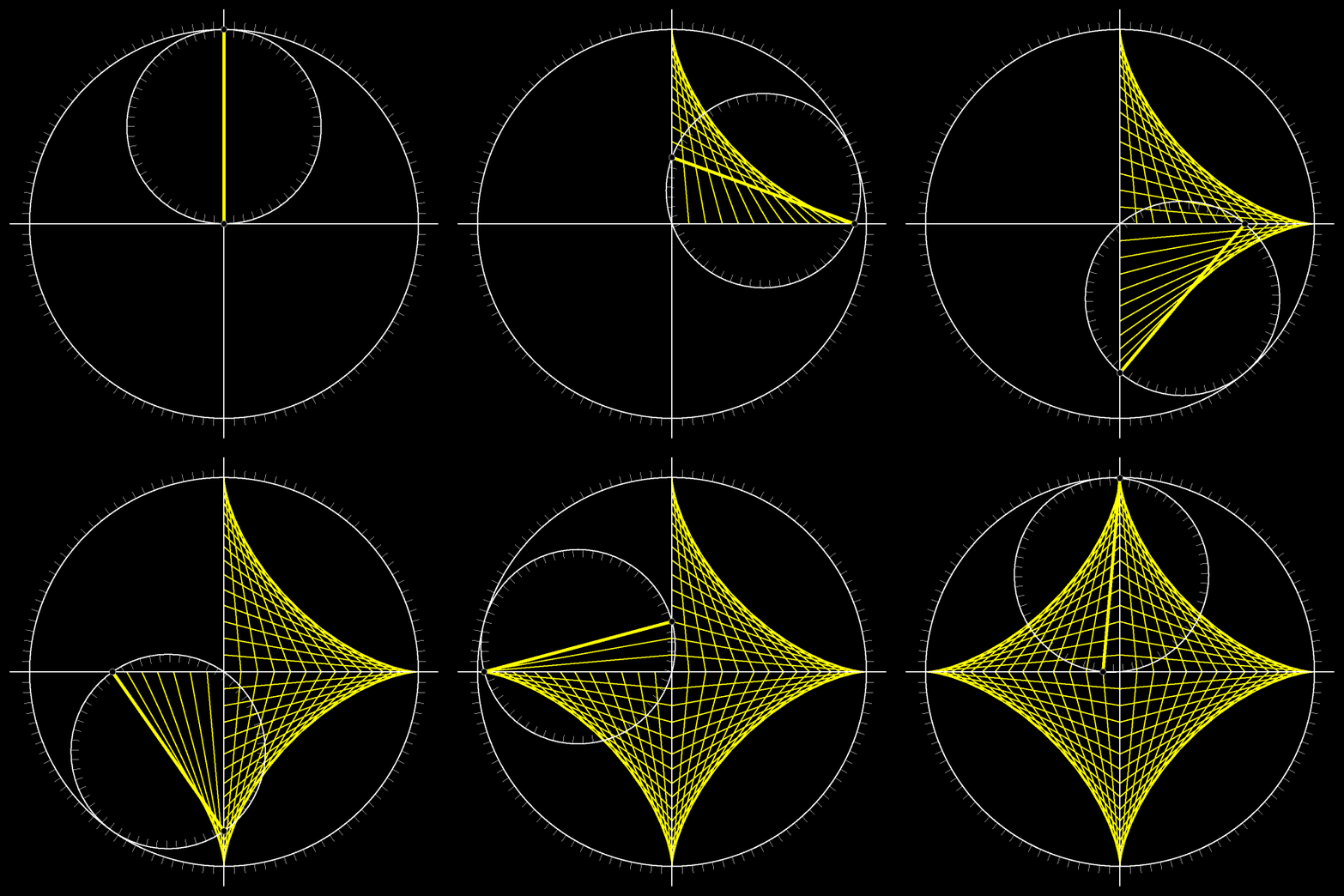
What region does the entire ladder sweep out during this motion?
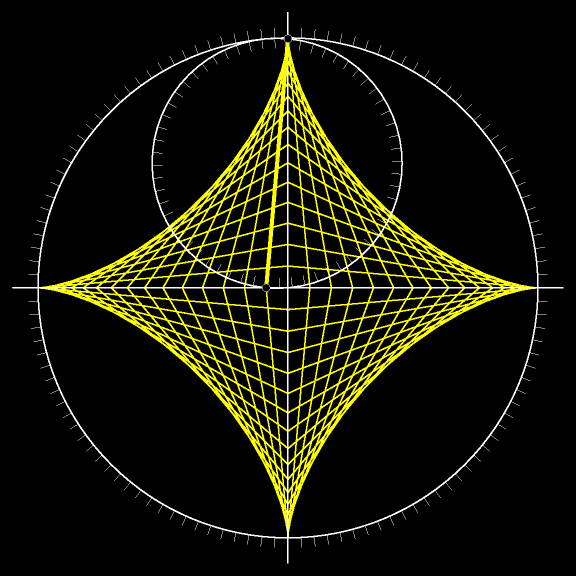
What region does the entire ladder sweep out during this motion?
Clearly, it does not fill the entire disk.
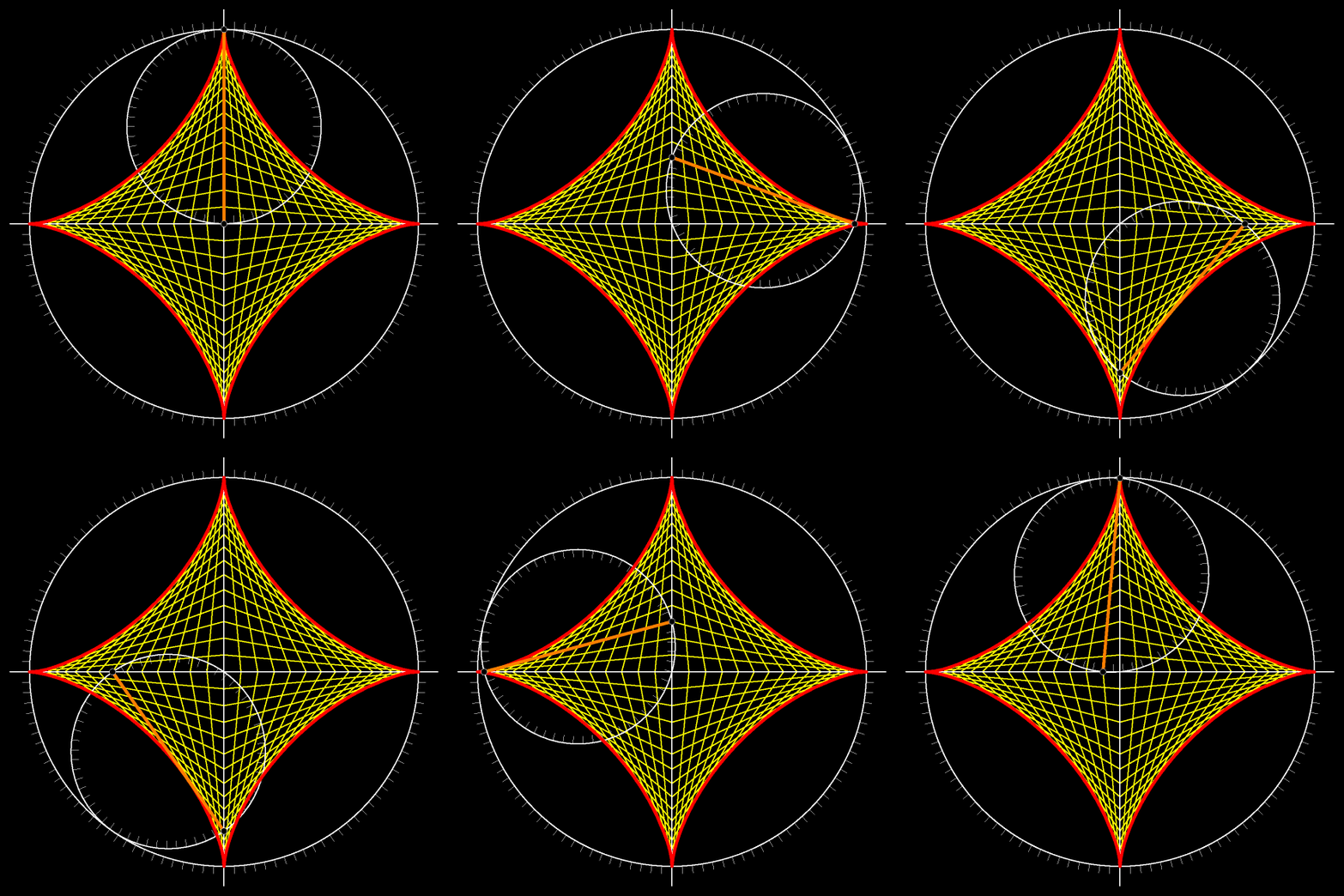
The boundary of this region is an astroid.
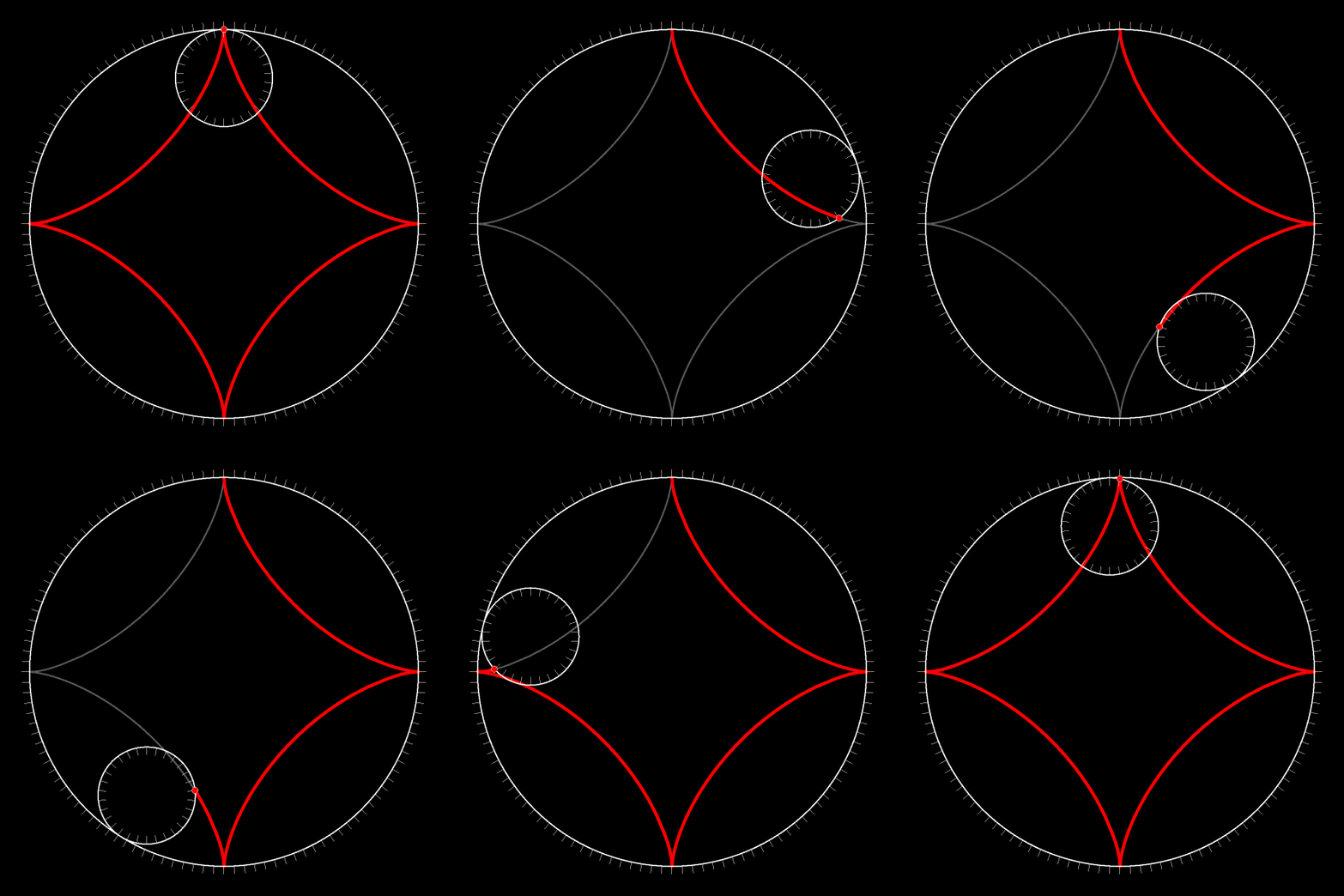
The boundary of this region is an astroid.
It is traced by a point on a circle rolling inside a larger circle whose radius is four times that of the rolling circle.
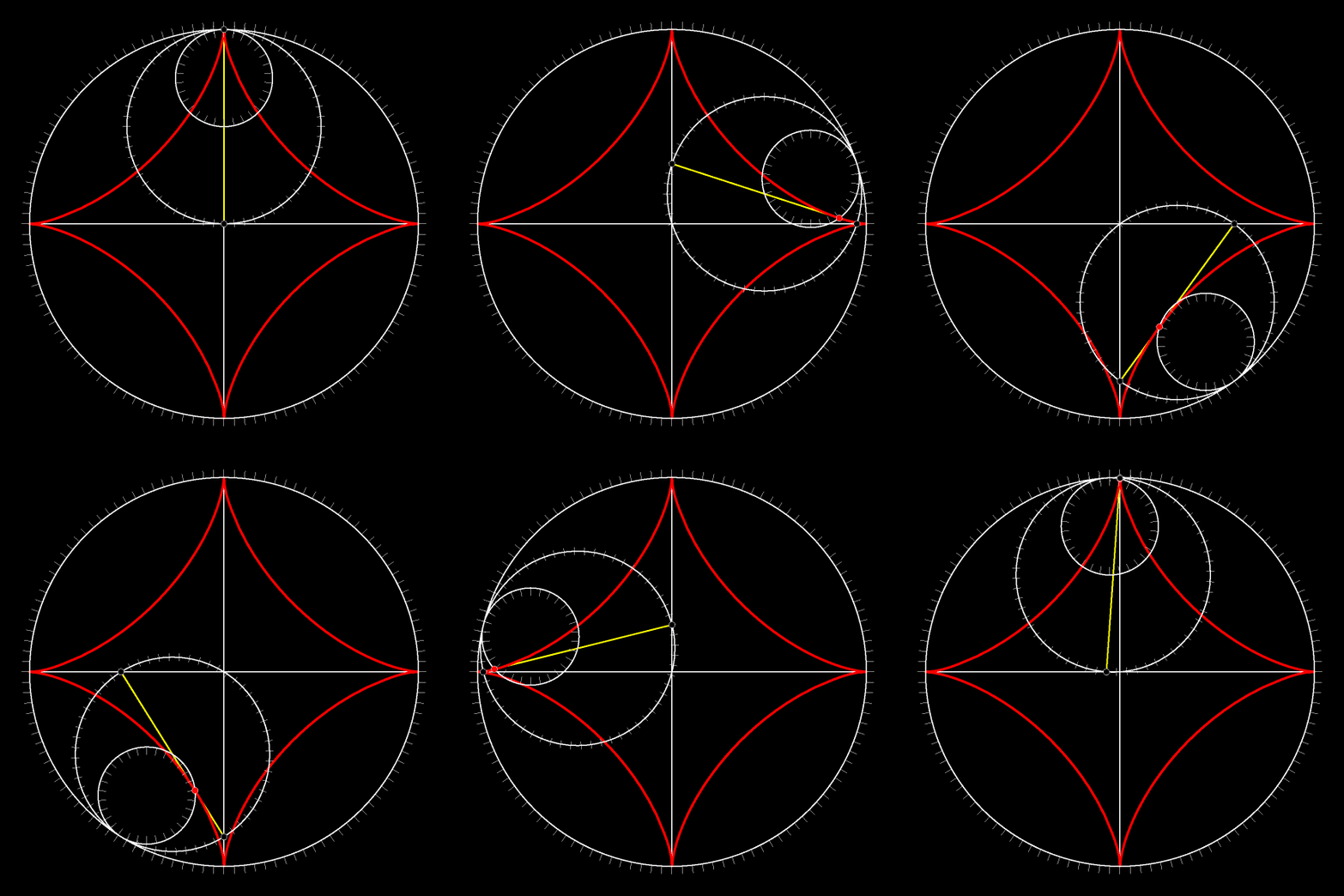
You can learn more about the astroid and why it appears in this problem from the book “Lines and Curves”.
Based on the book
“Lines and Curves”
by N. B. Vasiliev and V. L. Gutenmacher.
version 1en.2
Other stories: the optical property